History of the Movement
The Sunday School movement began in 1780 as a radical act of literacy and compassion — giving working children their one free day as a gateway to education. From England it spread across denominations, continents, and centuries.
Founders & Organizations
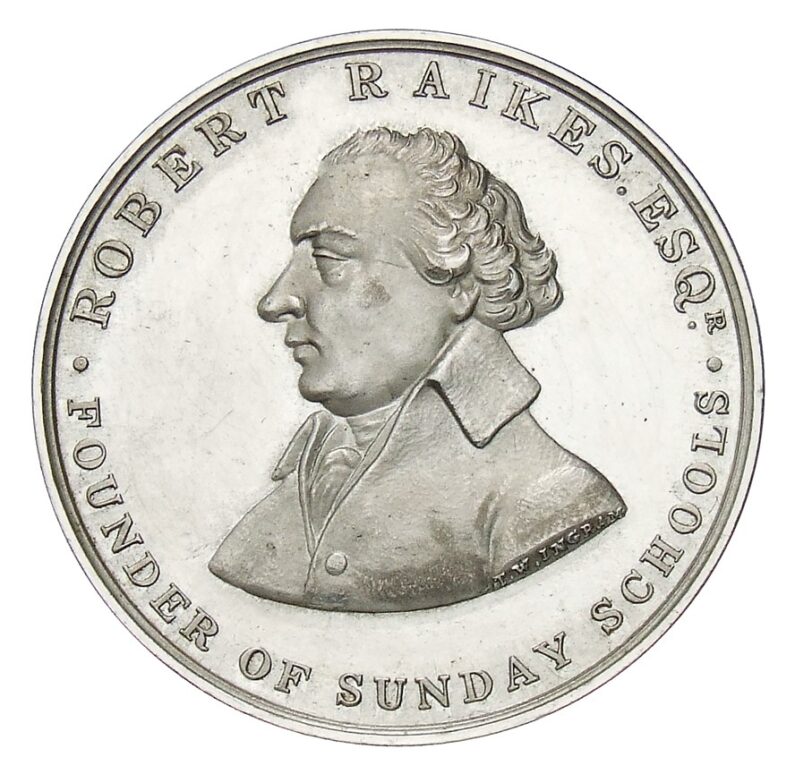
Robert Raikes
1735–1811
By the latter half of the 18th century, demand for child labour was so great in the factories of the Industrial Revolution that children worked six days a week for most of their waking hours. Sunday — protected by the Fourth Commandment — was their one free day. With no formal schooling or organized activity to fill it, many children turned to street games, gambling, and petty crime.
Robert Raikes, editor of the Gloucester Journal — the foremost newspaper in West England — had spent over a decade as a prison reformer, campaigning against the squalid conditions of the unregulated penal system. Witnessing children born and raised in prison, he concluded that prevention was more effective than cure.
He was not the first to act. Hannah Ball in High Wycombe and the Rev. J.M. Moffatt in Nailsworth had already set up small Sunday schools to keep children more positively occupied. But these were tentative, isolated experiments. What Raikes provided was a platform: in 1780, he established Sunday schools in Gloucester and used his newspaper to publicize them widely, transforming a local idea into a national movement.
The schools taught basic reading, the catechism, and moral instruction — giving working-class children access to literacy at a time when no other provision existed. Within years, the model had spread across England and across the Atlantic.
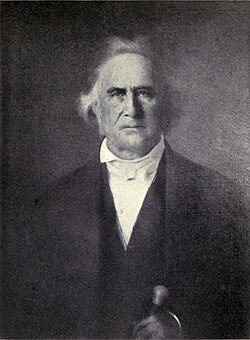
John Adams
1772–1863
Born in Canterbury, John Adams dedicated his life to the expansion of Sunday Schools as a vehicle for education and moral formation.
He became one of the movement's most prolific organizers, founding and coordinating several hundred Sunday schools during his long life.
His work helped transform what began as a local experiment in Gloucester into a broad institutional movement reaching tens of thousands of children.
American Sunday School Union
Founded 1824
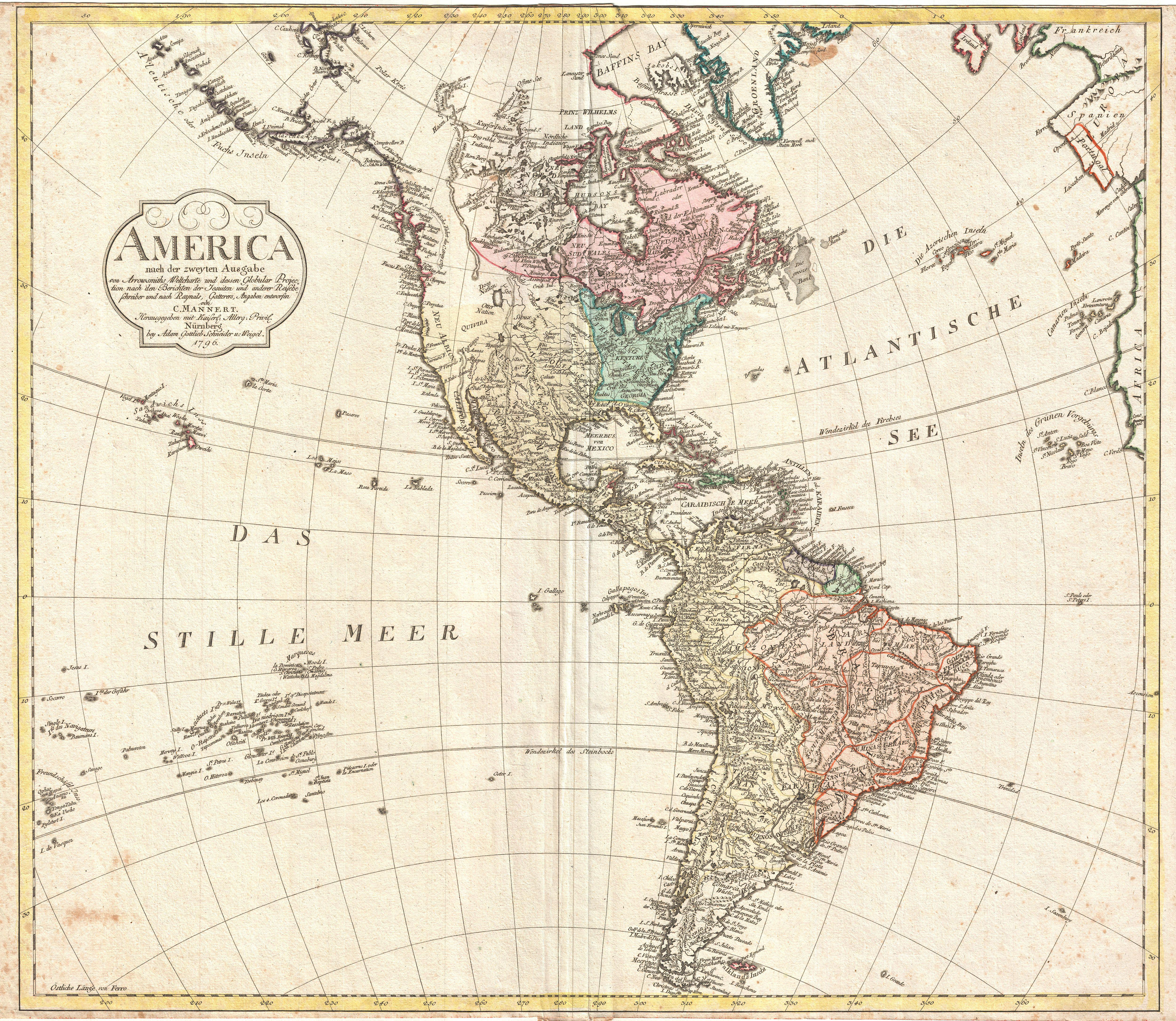
The American Sunday School Union (ASSU) is a historical, non-denominational organization founded in 1824 in Philadelphia. Its primary mission was to promote early literacy, establish Sunday schools, and distribute religious literature to children — particularly across the American frontier.
At a time when public schooling was scarce or nonexistent in many parts of the country, the ASSU filled a critical gap, dispatching missionaries and organizers westward to plant schools in new settlements.
Through its publishing arm, the Union produced millions of books, pamphlets, and lesson materials — making it one of the most prolific distributors of children's literature in 19th-century America.
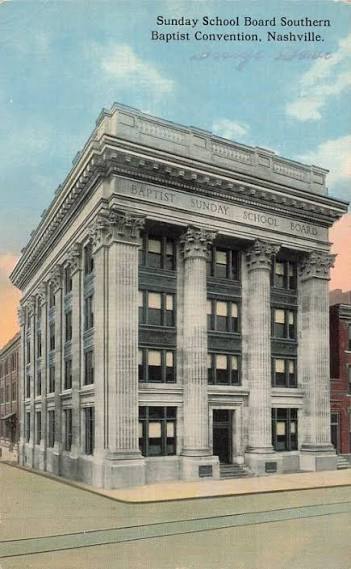
Southern Baptist Convention Sunday School Board
Founded 1891
The Southern Baptist Convention Sunday School Board was established in Nashville in 1891, created by the SBC to bring denominational control over the production and distribution of religious education materials. Before its founding, Southern Baptist churches had relied primarily on the non-denominational American Sunday School Union and independent publishers — an arrangement many SBC leaders viewed as theologically insufficient for a tradition built on the authority of Scripture and the autonomy of the local congregation.
Under the direction of James Marion Frost, its first corresponding secretary, the Board rapidly built one of the most prolific religious publishing enterprises in American history. By the turn of the twentieth century it was printing millions of lesson quarterlies, teacher guides, and take-home papers annually — materials that served Sunday schools across the American South and eventually across the world. The Board's Broadman imprint became the standard reference for Baptist theological and educational literature.
The most transformative figure in the Board's history was Arthur Flake, who in 1920 joined the staff and within two years published his landmark 'Flake's Formula' — a five-step model for Sunday school growth: (1) know the possibility, (2) enlarge the organization, (3) provide the space, (4) enlist and train the workers, (5) go after the people. Simple, scalable, and relentlessly practical, Flake's Formula became the most widely adopted organizational method in American Protestant religious education, reshaping the structure of Sunday schools from rural mission churches to urban megacongregations. In 1998 the Board was renamed LifeWay Christian Resources, and today operates one of the largest networks of Christian bookstores and digital resources in the world.
Denominational Traditions
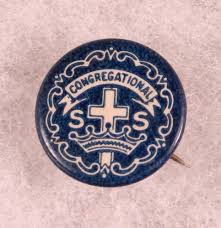
Congregational Sunday Schools
Horace Bushnell · Dwight L. Moody · Congregational Sunday School & Publishing Society (1832)
Congregationalists were among the earliest American adopters of the Sunday school, establishing parish schools during the 1790s across New England. Rooted in the Puritan conviction that literacy and Scripture were inseparable, the tradition saw education as both a religious duty and a civic responsibility.
Theologian Horace Bushnell's landmark 1847 work Christian Nurture shifted the entire movement's philosophy — arguing that children should be raised within the faith from infancy, through gradual formation rather than dramatic conversion. This 'nurture theology' shaped Congregational curricula for generations and anticipated progressive educational reforms of the early twentieth century.
Because Congregational polity rejected centralized ecclesiastical authority, each congregation maintained control over its own curriculum and teachers — making Congregational Sunday schools deeply local in character. Their influence on public education was profound: many early advocates for universal common schooling, including Horace Mann, came from communities where Sunday school literacy programs had normalized education as a moral obligation.

Armed Forces Sunday Schools
Susan Warner · Anna Warner · U.S. Military Academy at West Point
Military Sunday School history encompasses both the religious instruction of troops and the moral education embedded in cadet training. The most famous example is at the U.S. Military Academy at West Point, where civilian sisters Susan and Anna Warner taught Sunday school classes and Bible studies to cadets from 1859 until 1915.
Susan Warner is best known as the author of The Wide, Wide World (1850) — one of the best-selling American novels of the nineteenth century — while Anna Warner wrote the beloved hymn 'Jesus Loves Me' (1859), words that cadets at West Point would have sung under their instruction. The sisters lived on Constitution Island, just across the river from West Point, and rowed across each Sunday to teach. Their ministry continued for over five decades, spanning the Civil War, the Spanish-American War, and into the early years of World War I.
Beyond West Point, the Armed Forces Sunday School tradition extended to military chaplaincy, garrison chapels, and field services during every major American conflict. The Sunday School for Soldiers movement during the Civil War distributed millions of tracts and lesson cards to Union and Confederate troops alike, while the Young Men's Christian Association (YMCA) carried Sunday school programming into military camps through both World Wars. The 'S.J.S.' (Soldiers' Junior Sunday School) pins and emblems became recognized tokens of faith-based military service throughout the late nineteenth and early twentieth centuries.
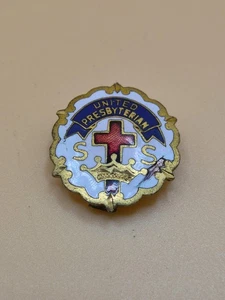
Presbyterian Sunday Schools
Charles Hodge · Albert Barnes · Westminster Shorter Catechism (1647)
Presbyterians brought to the Sunday school their centuries-old Scottish heritage of catechetical instruction. The Westminster Shorter Catechism — with its precise question-and-answer format covering God, sin, grace, and the moral law — was the backbone of Presbyterian Sunday school education well into the twentieth century. Religious education was understood as systematic theological formation, not merely Bible storytelling.
The Presbyterian Church USA established its own Board of Publication and Sabbath-School Work in 1838, placing curriculum development under denominational governance. Presbyterians also pioneered the 'graded curriculum' movement in the early 1900s, developing age-specific materials rooted in both biblical theology and developmental psychology. The 1948 'Christian Faith and Life' curriculum became a landmark across all Protestant denominations.
Presbyterian Sunday schools differed from non-denominational models most clearly in their insistence on doctrinal precision and confessional accountability — the session (governing elders) held authority over religious education, embedding the Sunday school directly within the congregation's governance structure.
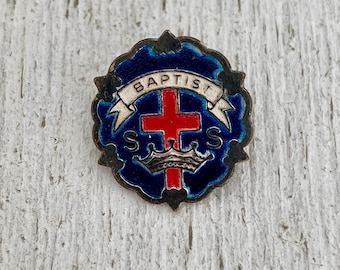
Baptist Sunday Schools
John A. Broadus · Arthur Flake · Southern Baptist Convention Sunday School Board (Nashville)
Baptist Sunday schools were shaped by two core convictions: the priesthood of all believers — which democratized teaching authority — and the absolute centrality of the Bible. Baptists embraced the Sunday school as simultaneously a learning environment and an evangelism tool. Arthur Flake's 1922 'Flake's Formula' — a five-step method for growing Sunday school enrollment — was adopted by thousands of congregations and became the most influential organizational model in American Protestant religious education.
The Southern Baptist Convention established its Sunday School Board in Nashville in 1891, making curriculum publishing a major institutional enterprise. By the mid-twentieth century, the SBC Sunday school system was the largest Protestant educational enterprise in American history, enrolling millions of children and adults. The Board was renamed LifeWay Christian Resources in 1998 and became one of the largest Christian publishing houses in the world.
Baptist Sunday schools understood enrollment as a pipeline toward believer's baptism and church membership, giving them a distinct evangelistic character. The emphasis on volunteer lay teachers — drawn directly from the priesthood of all believers — created a model that could scale rapidly across frontier communities without requiring ordained clergy.
Catholic Sunday Schools
Archbishop Carlo Borromeo · Bishop Edwin V. O'Hara · Pope Pius X (Acerbo Nimis, 1905)
The Catholic tradition of organized religious education predates the Protestant Sunday school movement by more than two centuries. The Confraternity of Christian Doctrine (CCD) was formally established in Rome in 1562 under Archbishop Carlo Borromeo, institutionalizing Sunday and feast-day catechism instruction for children and adults. The Council of Trent (1545–1563) had mandated catechetical instruction as a pastoral priority, and the Roman Catechism (1566) standardized its content across the Church.
In the United States, the CCD gained institutional momentum under Bishop Edwin V. O'Hara, who organized the first National Confraternity Congress in 1935. O'Hara recognized that millions of Catholic children — especially in rural areas and immigrant communities — attended public schools and had no formal religious instruction beyond Sunday Mass. The Baltimore Catechism (first U.S. edition, 1885) organized Catholic doctrine into a memorable question-and-answer format covering the Creed, Commandments, Sacraments, and prayer.
Following the Second Vatican Council (1962–1965), CCD programs transformed significantly — shifting from rote memorization toward experiential, dialogue-centered, Scripture-integrated approaches. The phrase 'CCD' itself gave way to 'religious education' and 'faith formation.' At its peak in the 1960s, CCD programs enrolled more than five million students in the United States, making it one of the largest religious education systems in the world.

Evangelical Sunday Schools
Robert Raikes · Hannah Ball · Rev. J.M. Moffatt · Raikes Memorial (Gloucester Cathedral)
The evangelical Sunday school movement began in 1780 in Gloucester, England, when publisher Robert Raikes organized classes to teach impoverished, working-class factory children to read, write, and study the Bible. Raikes's goal was to curb rampant juvenile delinquency and provide basic education to children who labored six days a week in the factories of the Industrial Revolution — with Sunday as their only free day.
Raikes was not the first to act on this impulse. Hannah Ball in High Wycombe and the Rev. J.M. Moffatt in Nailsworth had already set up small Sunday schools before 1780. But what Raikes provided was a platform: as editor of the Gloucester Journal — the most widely read newspaper in western England — he publicized the experiment nationally, transforming a local act of compassion into a transatlantic movement within a decade.
The evangelical character of the movement was foundational. Raikes and his collaborators believed that literacy and Scripture were inseparable — that the same hour which opened the Bible to a child also opened the door to moral formation, civic virtue, and eternal hope. Within years of Gloucester, Sunday schools had spread across England, Scotland, Wales, and across the Atlantic to the American colonies. By 1831, it was estimated that more than 1.25 million children were enrolled in Sunday schools in England alone. The movement became one of the largest voluntary educational enterprises in human history and the direct ancestor of every denominational Sunday school tradition that followed.
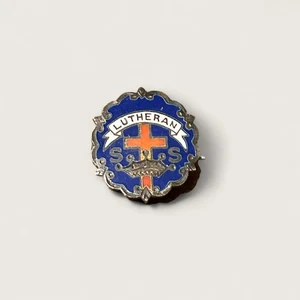
Lutheran Sunday Schools
Martin Luther · Henry Melchior Muhlenberg · C.F.W. Walther · Lutheran Sunday School Mission (Philadelphia)
Lutheran religious education is rooted in Martin Luther's conviction that every Christian must be able to read Scripture for themselves. His Small Catechism of 1529 — presenting the Ten Commandments, the Apostles' Creed, the Lord's Prayer, and the sacraments in plain question-and-answer form — became the foundational text of Lutheran Sunday school instruction for nearly five centuries. Luther also authored the Large Catechism the same year as a guide for pastors and teachers, establishing a two-tier educational model that shaped Lutheran pedagogy long before Sunday schools existed as an institution.
Lutheran Sunday schools in America developed primarily through waves of German and Scandinavian immigration in the nineteenth century. Henry Melchior Muhlenberg, the patriarch of American Lutheranism, had established parish schools in Pennsylvania as early as the 1740s, but it was the organizational energy of the mid-1800s that transformed these parish efforts into a coordinated movement. The Lutheran Sunday School Mission, founded in Philadelphia in 1886, became the principal coordinating body, producing materials and training teachers across the major synods — including the Missouri Synod (LCMS, founded 1847), the General Synod, and the General Council. C.F.W. Walther of the Missouri Synod insisted on confessional fidelity in all educational materials, making Lutheran curricula among the most doctrinally rigorous in American Protestantism.
Lutheran Sunday schools were distinguished by their sustained emphasis on catechetical formation as a pipeline to confirmation — the rite of passage through which young people publicly affirmed the baptismal covenant and were admitted to full communicant membership. This confirmation culture meant that Lutheran Sunday school attendance was understood not merely as moral education but as preparation for a specific theological commitment, with Luther's Small Catechism memorized and examined before the congregation. Following the mergers that created the American Lutheran Church (1960) and the Lutheran Church in America (1962), and ultimately the Evangelical Lutheran Church in America (1988), curricula became increasingly ecumenical and experiential while retaining the catechetical core.
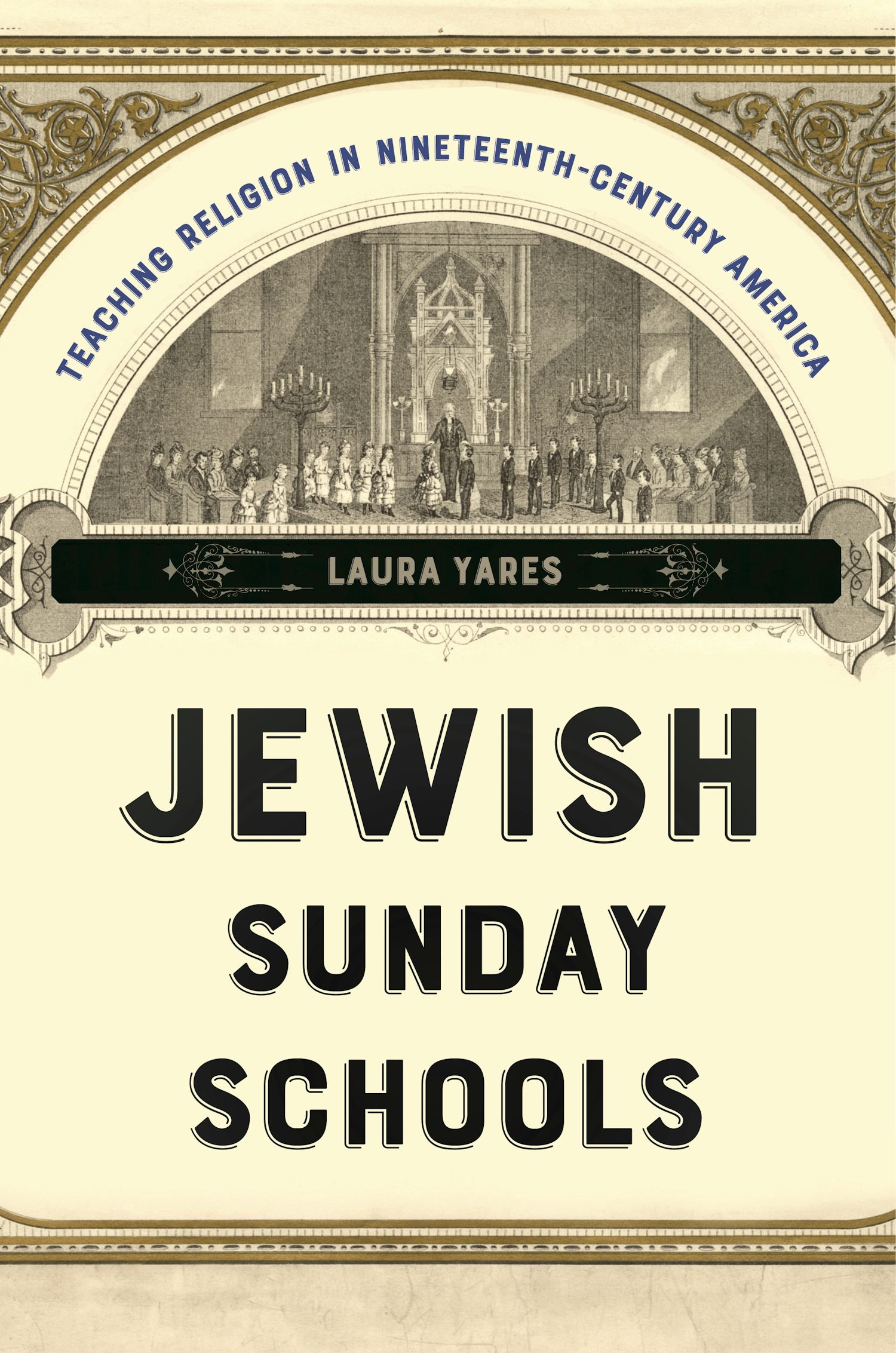
Jewish Sunday Schools
Rebecca Gratz · Isaac Mayer Wise · Union of American Hebrew Congregations (1873)
The first Jewish Sunday school in America was founded on February 4, 1838, in Philadelphia by Rebecca Gratz — one of the most influential Jewish women of the 19th century. Modeled structurally after Protestant Sunday schools, which had spread across American cities since the 1820s, Gratz's school was created to provide accessible religious education to Jewish immigrant children and to defend them against predatory Christian missionaries who were aggressively proselytizing immigrant communities through charitable school networks. Her approach was direct: meet Jewish children in the format the broader culture recognized — Sunday morning, English-language, volunteer-taught — and give them a deep grounding in their own faith.
Gratz's model was distinctively American: instruction in English rather than Yiddish or Hebrew, female-led (making Jewish Sunday schools among the first institutional spaces where Jewish women exercised public educational authority), and broadly accessible across Reform, Conservative, and traditionally observant families. The Hebrew Sunday School Society produced its own texts, catechisms, and prayer books tailored for American Jewish children. Within two decades, the model had spread to New York, Baltimore, Cincinnati, Charleston, and New Orleans. Rebecca Gratz is widely believed to have inspired the character of Rebecca in Sir Walter Scott's Ivanhoe (1819), as described to Scott by Washington Irving.
The Union of American Hebrew Congregations (UAHC), founded in 1873, formalized and standardized Jewish religious education. Isaac Mayer Wise — the founder of Reform Judaism in America — had integrated Sunday school programming into Reform congregational structure in Cincinnati in the 1850s, and the UAHC established the Hebrew Union College (1875) to train rabbis who in turn led congregational religious schools. By the early 20th century, Sunday schools were a standard feature of American synagogue life across all major denominations. Modern Jewish religious schools — variously called Hebrew School, Religious School, or Supplementary School — typically cover holiday observances, life-cycle ceremonies including Bar and Bat Mitzvah preparation, the Holocaust, Israel, and Jewish values including Tikkun Olam and tzedakah.
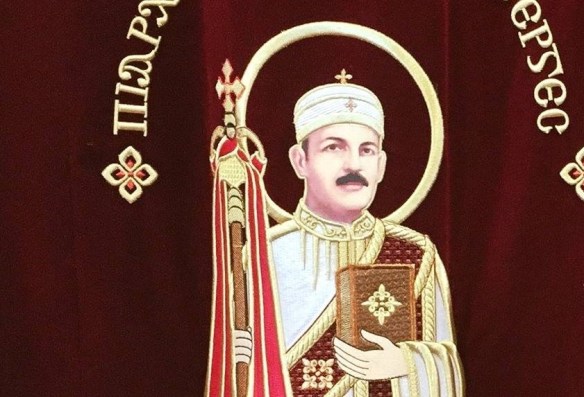
Coptic Orthodox Sunday Schools
Archdeacon Habib Girgis · Pope Cyril VI · Pope Shenouda III
The Coptic Orthodox Sunday School movement was founded in Egypt in the late 1890s and formally organized in 1918 by Archdeacon Habib Girgis — a deacon, educator, and reformer who served the Coptic Church with extraordinary dedication. Girgis recognized that the Church faced twin threats: widespread religious illiteracy among Coptic laypeople and aggressive Protestant missionary activity that was drawing educated Copts away from their ancient faith. His response was to build a systematic, structured Sunday school program that would form Copts in their own theological tradition from childhood.
Girgis founded the Coptic Orthodox Sunday School at St. Mark's Cathedral in Cairo and developed its curriculum himself — producing catechetical texts, Bible study guides, and devotional materials in Arabic that had never existed in that form before. He also established the Higher Institute of Coptic Studies to train Sunday school teachers, creating a pipeline of educated lay educators who could staff parish schools across Egypt. His vision was explicitly counter-missionary: by raising a generation of Copts grounded in patristic theology, liturgical practice, and the Coptic heritage, the Sunday school would become the Church's greatest instrument of self-preservation and renewal.
The movement sparked a major 20th-century Coptic revival. Pope Cyril VI and especially Pope Shenouda III — himself a product of the Sunday school movement and a former Sunday school teacher — institutionalized it as a central pillar of Coptic parish life worldwide. The movement spread across Sudan, Ethiopia, and eventually to global Coptic diaspora communities in the United States, Canada, Australia, and Europe. The Coptic Sunday School revolutionized the Church's educational and social life, bridging a critical gap between traditional clerics and the educated laity. Habib Girgis was glorified as a saint by the Coptic Orthodox Church in 2013.
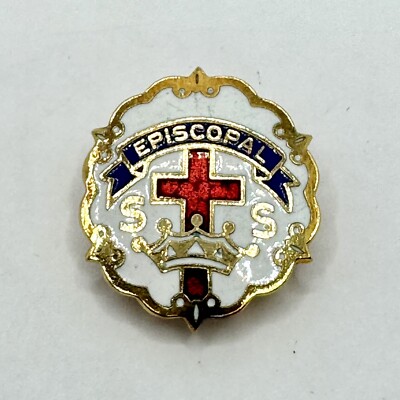
Episcopal Sunday Schools
Bishop William White · William Augustus Muhlenberg · Jerome Berryman · Seabury Press
The Protestant Episcopal Church in the United States (PECUSA), formally organized in 1789 after the Revolution, was among the first American denominations to embrace Sunday school education. Bishop William White of Pennsylvania supported Sunday schools in the 1790s as consistent with Anglican theological formation, and the Protestant Episcopal Sunday School Society was formally organized in Philadelphia in 1817 — one of the earliest denominational Sunday school bodies in the United States.
Unlike many Protestant denominations that relied on externally published curricula, Episcopal Sunday schools had a distinctive theological anchor: the Book of Common Prayer and its embedded Catechism. Children memorized the Apostles' Creed, the Lord's Prayer, the Ten Commandments, and the Q&A catechism. Systematic Scripture reading through both Testaments and congregational hymnody were central. The General Convention began formally tracking Sunday schools in triennial reports by the 1830s.
After the Civil War, the Episcopal Church expanded Sunday school ministry through the Protestant Episcopal Freedman's Commission (1865), establishing schools in Virginia, North Carolina, Georgia, and South Carolina that functioned as both day schools and Sunday schools. Mission Sunday schools were simultaneously planted in NYC tenement neighborhoods serving immigrant and working-class communities. The Department of Religious Education was formally established in the Episcopal Church's national structure around 1919.
Seabury Press (founded 1951) produced the landmark Seabury Series — one of the most sophisticated graded curricula in American Protestantism, adopted even outside Episcopal parishes. The revised Book of Common Prayer (1979) reshaped Sunday school content around baptismal covenant theology. Jerome Berryman, an Episcopal priest, created Godly Play — a Montessori-influenced method using tactile materials and open-ended wondering questions — which became one of the most widely used Sunday school methods globally. Today most Episcopal parishes use the term 'Christian Formation' rather than Sunday School, emphasizing intergenerational, whole-congregation learning.
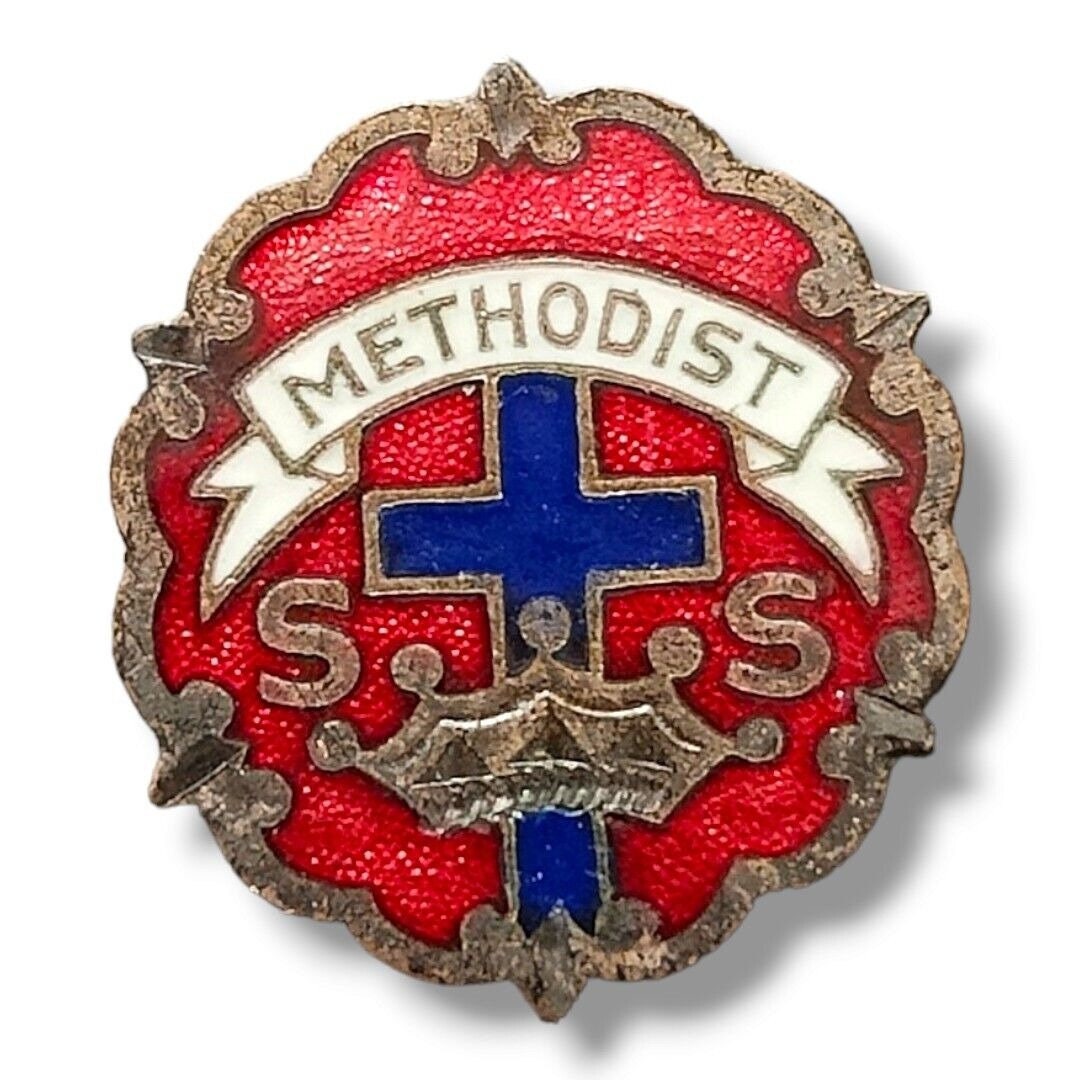
Methodist Sunday Schools
John Wesley · Bishop John H. Vincent · Chautauqua Institution (1874)
Methodism has the deepest historical claim to the Sunday school as an institutional expression of its founding values. John Wesley personally endorsed Robert Raikes's work in 1780, and Methodist circuits in England adopted Sunday schools almost immediately. In America, the Methodist Episcopal Church formally endorsed Sunday schools at its 1790 conference, making Methodism the first major American denomination to do so. Methodist missionaries carried the Sunday school westward alongside the camp meeting revival.
Bishop John H. Vincent transformed Methodist Sunday school education through two landmark contributions: the founding of the Chautauqua Institution in 1874 — a summer assembly for Sunday school teachers that grew into a national adult education phenomenon drawing presidents and scientists — and his development of the Berean lesson system, which contributed directly to the International Uniform Lessons adopted across denominations in 1872. Chautauqua became one of the largest adult education enterprises in American history.
Methodist Sunday school philosophy reflected Wesleyan theology's optimism: all children were objects of God's prevenient grace, already capable of responding to instruction. This conviction produced schools that welcomed adults and children alike as lifelong learners, and gave Methodist Sunday schools a stronger adult education component than most Protestant models. Methodist Sunday schools also carried a prophetic social dimension — engagement with temperance, abolition, and labor rights — that distinguished them from more privatized evangelical approaches.